Heavy Industry Confidential Chemical Plant

Changbin Industrial Park — Oil-Spray Sealed-Tank Thermal Monitoring (2011-present)

Oil-sealed tanks continuously spray hot oil; conventional thermometers fall off within 3 months and cannot be drilled into operating tanks.

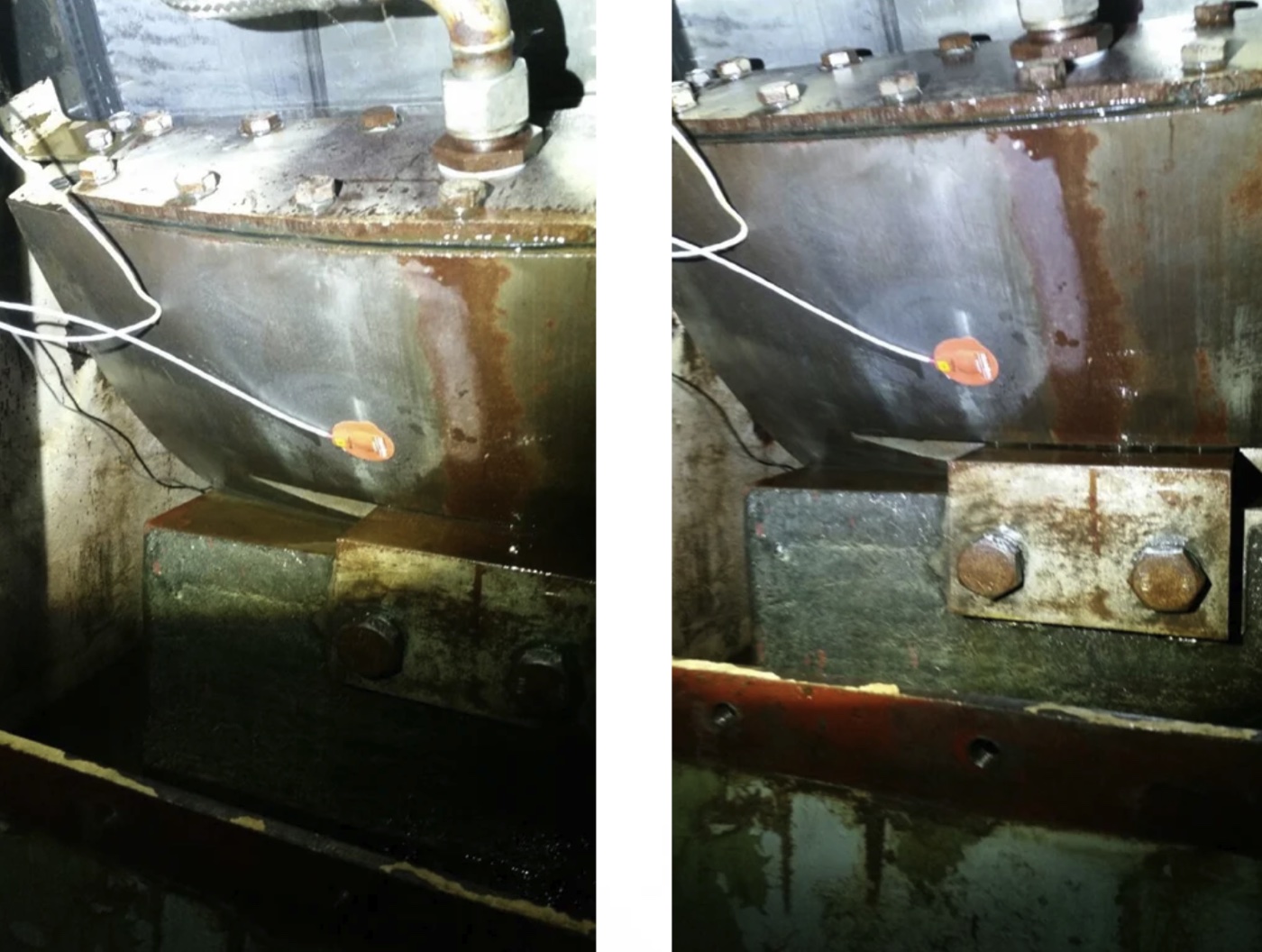
Changbin Industrial Park — Oil-Spray Sealed-Tank Thermal Monitoring (2011-present) — field installation photo
Confidential Chemical Plant · Heavy Industry

01 The Problem

At a chemical plant in Changbin industrial park, oil-sealed reaction vessels constantly throw a fine mist of hot oil into the air. Conventional thermometers fall off the tank wall within three months — the oil dissolves the adhesive. And you can't drill a probe into a vessel that's running.

The Risk

Oil-sealed tanks continuously spray hot oil; conventional thermometers fall off within 3 months and cannot be drilled into operating tanks.

02 The OctosX Solution

We bond a Thermalpas M-TYPE sensor to the tank wall using a patented adhesive certified to ASTM D-3654 for oil and chemical resistance. The cable rating handles 180°C, the sensor housing is IP68, and the adhesive doesn't degrade in oil mist. OctosX monitors the oil seal's temperature stability and predicts when the seal needs replacement.

Sensor & Edge

Thermalpas M-TYPE (oil & chemical resistant per ASTM D-3654 + 180°C cable + IP68 + globally patented adhesive).

Cloud Logic & Alerting

OctosX Cloud monitors tank temperature stability and predicts oil-seal lifetime.

03 The Outcome

The same Thermalpas unit has been monitoring the same oil-sealed tank since 2011 — fifteen years without replacement. That's the strongest evidence we have of long-term adhesive durability under harsh chemical exposure anywhere in our product line.

Field Detection

The same unit has operated 15 years without failure (2011-2026) — the strongest evidence of Thermalpas adhesive durability under chemical exposure.

See it in your plant

Could this case be your plant?

Tell us about your facility — busbars, motors, panels, coal blowers, chillers, whatever your highest-risk thermal interface is — and we'll show you what an OctosX deployment would look like.