Heavy Industry Multiple Power Plants & Steelmakers

Coal Conveyor Thermal Anomaly Detection — 10 Years in Harsh Environment

Coal conveyor bearings operate amid heavy dust, vibration, and heat.

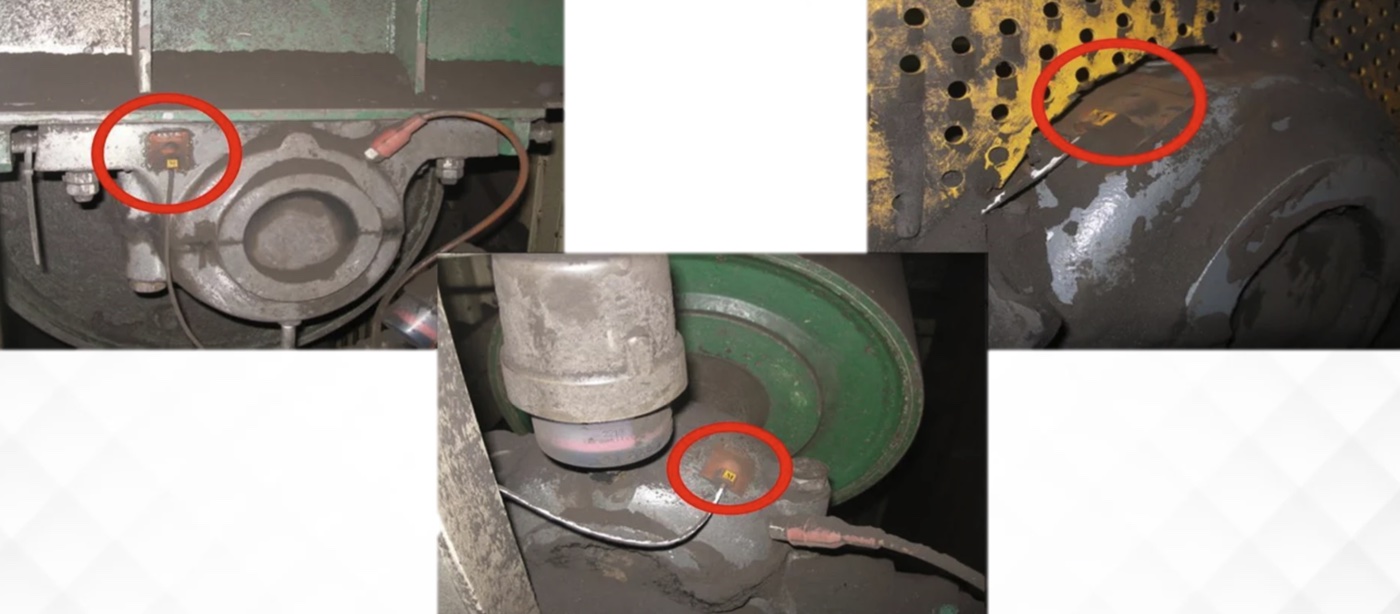
Coal Conveyor Thermal Anomaly Detection — 10 Years in Harsh Environment — field installation photo
Multiple Power Plants & Steelmakers · Heavy Industry

01 The Problem

A coal conveyor at a steel mill carries thousands of tons of coal a day through clouds of dust, with vibration shaking everything, and ambient temperatures that bake the bearings. Conventional thermocouples last about six months before they degrade and the readings drift. When a bearing finally seizes, the conveyor stops, the steelmaking line backs up, and the cost is $500K to $2M per shutdown.

The Risk

Coal conveyor bearings operate amid heavy dust, vibration, and heat.

Detection Gap

Conventional thermocouples degrade in 6 months. Bearing failures cause $500K-2M per shutdown.

02 The OctosX Solution

We bond a Thermalpas M-TYPE sensor directly to each bearing housing. IP68 sealing keeps the dust out; the adhesive and the cable rating both withstand vibration. OctosX learns the normal heat curve of each bearing during steady operation and watches the slope of the curve — a slow upward drift is usually the first sign of failure.

Sensor & Edge

Thermalpas M-TYPE bonded directly to bearing housing, IP68 + vibration-resistant.

Cloud Logic & Alerting

OctosX Cloud distinguishes normal vs. anomalous heat-curve slopes.

03 The Outcome

The same Thermalpas sensor unit has now operated for ten years on the same coal conveyor — no failures, no replacements. That's the strongest lifetime-baseline evidence in the OctosX portfolio, and it underwrites every conveyor and rotating-machinery proposal we write.

Field Detection

The same sensor unit has operated 10 years without failure — this is OctosX's "lifetime baseline" evidence for both Power and Heavy-Industry verticals.

See it in your plant

Could this case be your plant?

Tell us about your facility — busbars, motors, panels, coal blowers, chillers, whatever your highest-risk thermal interface is — and we'll show you what an OctosX deployment would look like.