Construction & R&D Major Contractor

Concrete Hydration Heat Monitoring — Thermalpas + Temp/Humidity Logger

Large concrete pours (foundations, columns, beams) generate 70°C+ hydration heat, causing thermal cracks.

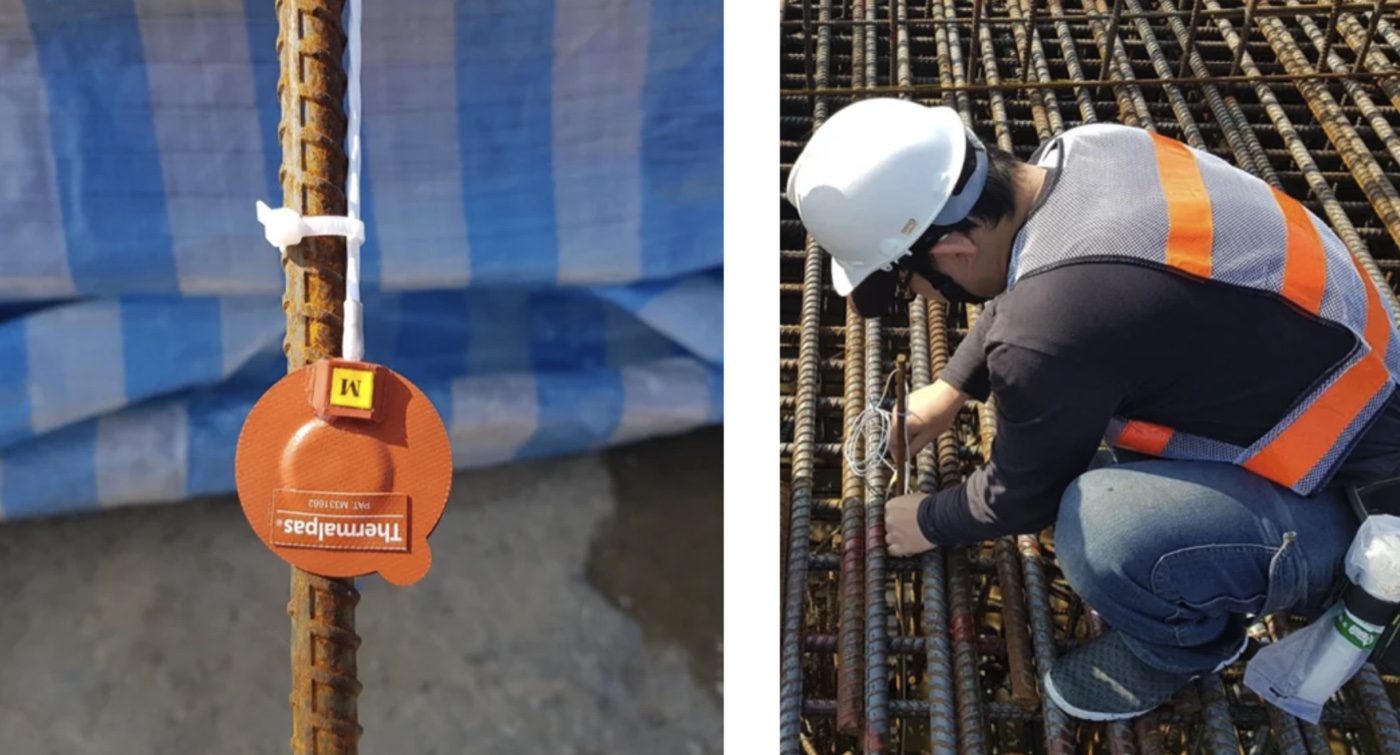
Concrete Hydration Heat Monitoring — Thermalpas + Temp/Humidity Logger — field installation photo
Major Contractor · Construction & R&D

01 The Problem

When you pour a massive concrete foundation or a 20-meter-thick column, the chemical reaction inside generates heat — and if you pour it too fast or the wrong way, the inside reaches dangerous temperatures while the outside is already cool, the concrete cracks internally, and the structure fails its strength test a month later. By then, it's much too late to fix.

The Risk

Large concrete pours (foundations, columns, beams) generate 70°C+ hydration heat, causing thermal cracks.

Detection Gap

Conventional embedded thermocouples interfere with rebar and are one-shot consumables.

02 The OctosX Solution

We embed Thermalpas thermal sensors at depth in the pour, combined with a temperature and humidity logger. OctosX tracks the temperature curve at each depth in real time. The site engineer sees a graph of every depth zone of every pour and can intervene if anything is heading the wrong way.

Sensor & Edge

High-temp Thermalpas + waterproof T&H logger strapped to rebar cage; monitors 28-day hydration curve post-pour.

Cloud Logic & Alerting

OctosX Cloud delivers "Concrete Strength Development Forecast" reports for contractors and inspectors.

03 The Outcome

Contractors using the system have eliminated pour-related cracking on their large projects. The data also feeds into project documentation, so building inspectors have an auditable record of the curing process — no more arguments after the fact about whether the pour was monitored properly.

Field Detection

A high-speed rail pier project saved 3 weeks of formwork waiting (early strength confirmation) — $500K saved per pier in construction time.

See it in your plant

Could this case be your plant?

Tell us about your facility — busbars, motors, panels, coal blowers, chillers, whatever your highest-risk thermal interface is — and we'll show you what an OctosX deployment would look like.