Power & Electrical Confidential Chemical Plant

High-Temp Exhaust Stack — Thermal & Leak Monitoring

High-temperature stacks routinely run 200-400°C.

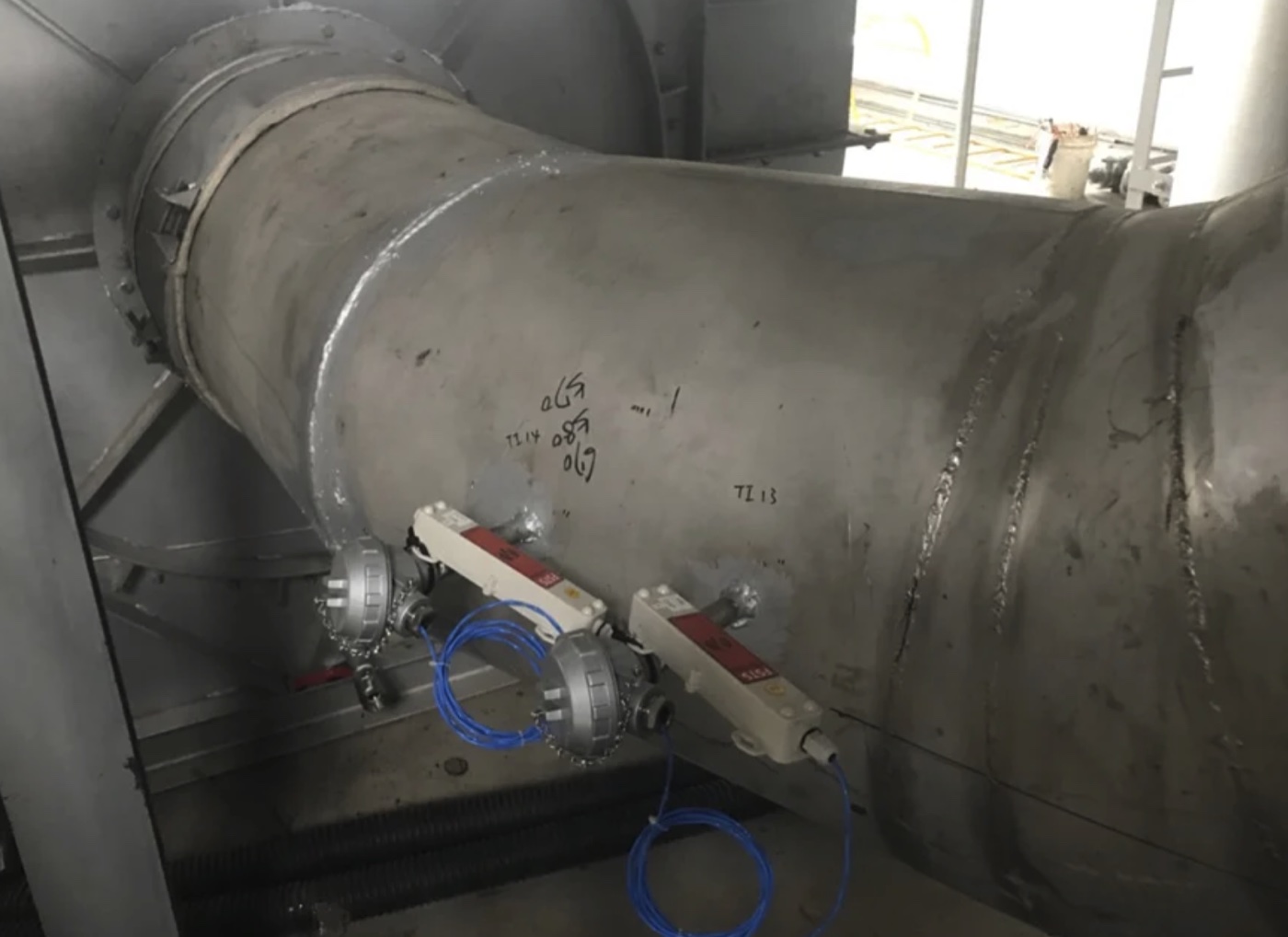
High-Temp Exhaust Stack — Thermal & Leak Monitoring — field installation photo
Confidential Chemical Plant · Power & Electrical

01 The Problem

A chemical plant's high-temperature exhaust stack runs at 200–400°C around the clock, carrying combustion gases up through a tall steel chimney. Every weld and every plate slowly thins from the inside — and when a weld cracks, the gas leaking from it is hot, toxic, and an automatic regulatory violation. You can't safely inspect a hot stack from a ladder.

The Risk

High-temperature stacks routinely run 200-400°C.

Detection Gap

Wall thinning or weld degradation causes gas leakage, but 24/7 manual patrol is infeasible.

02 The OctosX Solution

We attach eight Thermalpas G2-series sensors (rated to 250°C) along the stack at known intervals. OctosX learns what a normal temperature profile looks like over a week, then watches for sections that drift more than 15% off baseline — usually meaning the metal is thinning or a small crack is forming.

Sensor & Edge

Thermalpas G2 series (rated 250°C) + OctosX trend analysis benchmarks each segment's normal curve; ±15% deviation triggers alert.

03 The Outcome

At one chemical plant, OctosX picked up an 8°C rise on Stack Segment #3 over 72 hours — still within operating range but trending the wrong way. Inspection during the next planned outage revealed a hairline weld crack. $50,000 in repair welding avoided an EPA fine that would have started at $2 million and a forced shutdown.

Field Detection

A chemical plant deployed 8 sensors and OctosX detected slow temp rise (+8°C over 72hr) at Segment #3.

Quantified Impact

Inspection found a hairline weld crack — repair cost $50,000 avoided gas leak + EPA fine (conservatively $2M+).

See it in your plant

Could this case be your plant?

Tell us about your facility — busbars, motors, panels, coal blowers, chillers, whatever your highest-risk thermal interface is — and we'll show you what an OctosX deployment would look like.