01 The Problem
FPCC's Mailiao power station on Taiwan's west coast runs four boilers around the clock to power the entire petrochemical complex. Each boiler has 100+ soot blowers — high-pressure steam jets that clear coal residue off the boiler tubes. When one of those blowers gets stuck open and starts venting steam continuously, it's like aiming a power-washer at a copper pot — eventually the metal wears through, a tube ruptures, and the boiler comes down for emergency repair. Over a 10-year window, FPCC lost $128.5 million across four such incidents.
Background
Coal combustion deposits soot on boiler tubes, degrading heat transfer. Soot blowers cyclically purge tubes with high-pressure steam. A malfunctioning blower that runs continuously erodes tubes to rupture, forcing emergency shutdown.
10-Year Pre-Implementation Losses
4 incidents: FP2 (89.05.09) $31.3M / 3 days; FP3 (93.04.28) $75.5M / 12 days; UPB (94.06.07) $21.4M / 2 days; UPB (94.06.17) $0.36M / 2 days.
Why Thermalpas RTD (Not Infrared)
Comparison: Infrared (fails when occluded by ash) / Thermocouple (high-temp drift, requires compensation) / Thermistor (< 100°C only, poor accuracy) / Thermalpas RTD (contact type, IP67, reusable, customizable) — clear winner.
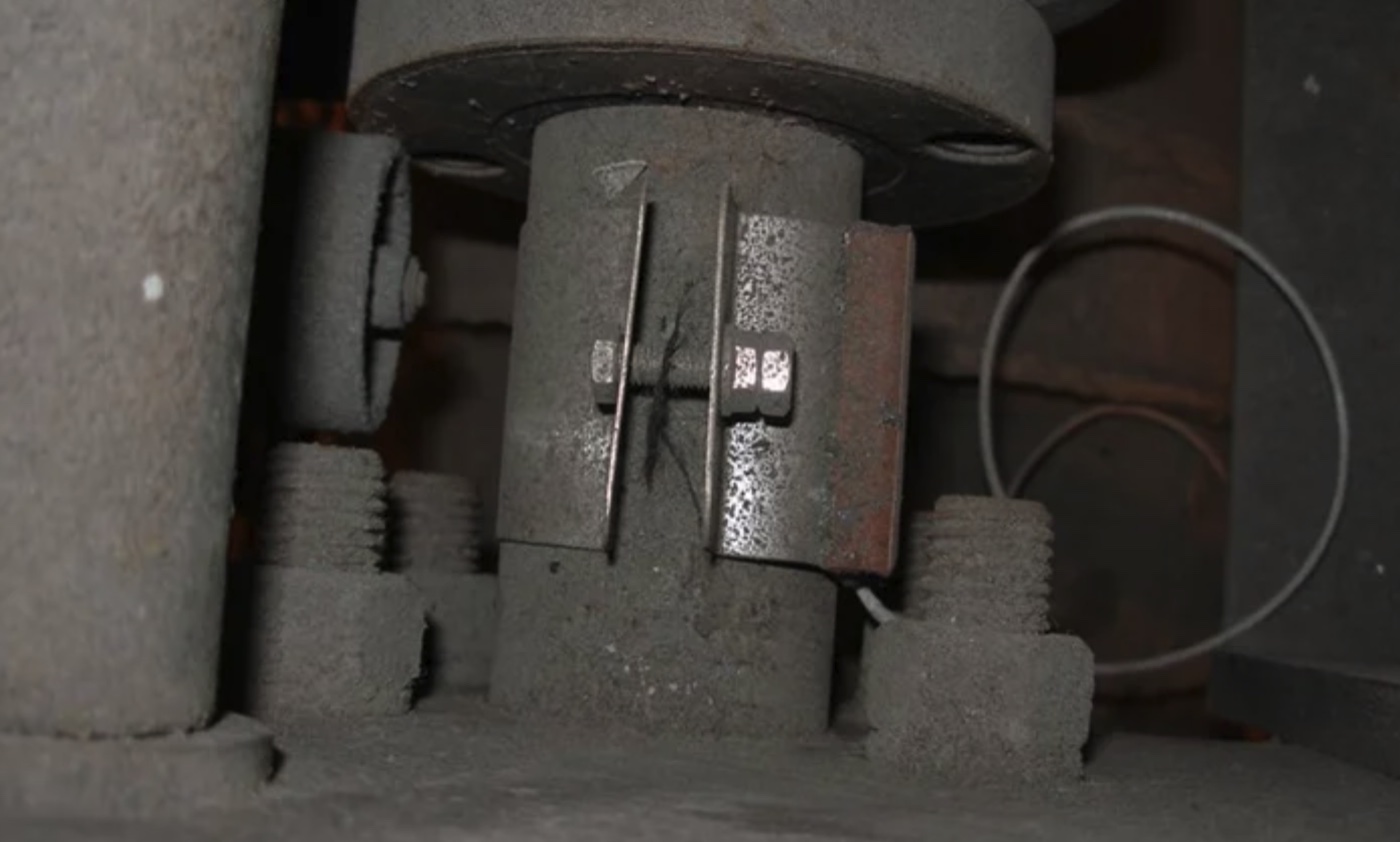
Field Installation & Soot Test
Installation location: short-range soot-blower angle valve outlet (top view). After 3 weeks, sensor surface is coated with fly ash.
ROI Analysis
Pre-implementation 10-year loss $128.5M = $12.85M/year average. OctosX deployment capex $13.46M. Payback = 13.46 ÷ 12.85 ≈ 1.1 years.