Power & Electrical Confidential

Rotary Kiln / Rotating Exhaust Duct Thermal Monitoring

Rotating kiln shells preclude permanent wired sensing.

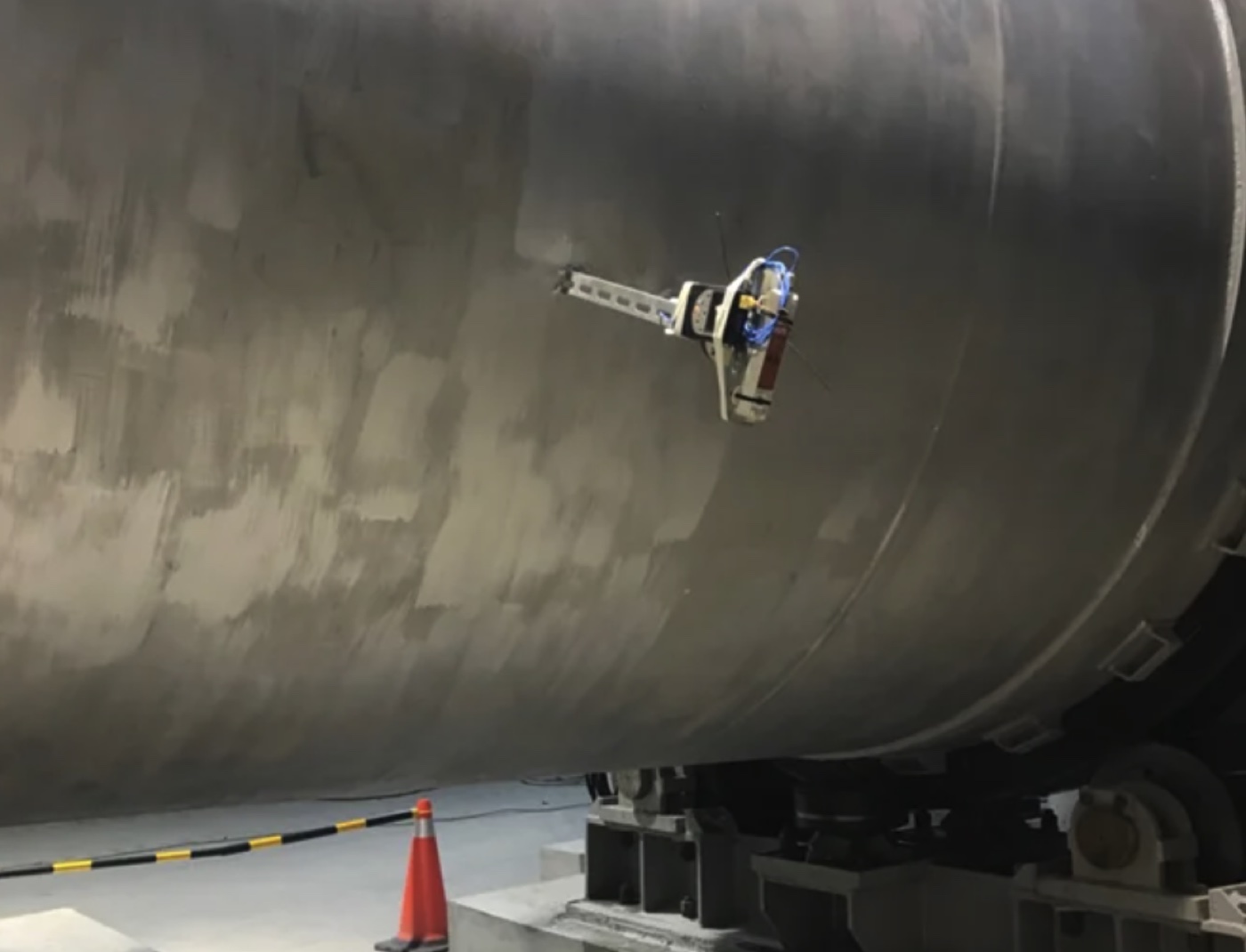
Rotary Kiln / Rotating Exhaust Duct Thermal Monitoring — field installation photo
Confidential · Power & Electrical

01 The Problem

A cement kiln is a steel cylinder 80 meters long and four meters wide, slowly rotating while burning fuel inside. The refractory brick lining the inside wears unevenly. When a brick spalls and falls off, the steel shell underneath gets exposed to direct flame and starts to deform. By the time the operator sees a glowing red patch on the outside, the kiln body is bent and the repair bill exceeds $50 million.

The Risk

Rotating kiln shells preclude permanent wired sensing.

Detection Gap

Anomalies (e.g., refractory-brick spalling) left undetected can deform the shell — a single major overhaul exceeds $50M.

02 The OctosX Solution

We use battery-powered Thermalpas wireless sensors with a solar trickle-charger, 12 of them positioned around the kiln circumference. As the kiln rotates, they radio-link back to a fixed gateway. OctosX displays a 'Heat Map by Kiln Angle' — operators see a 360° temperature map at a glance and can spot a developing hot zone weeks before it becomes visible.

Sensor & Edge

Thermalpas wireless version (battery + solar harvesting) + OctosX "Heat Map by Kiln Angle" dashboard — operators instantly identify rising sections.

03 The Outcome

One cement plant detected a small temperature anomaly on the southern arc of its kiln two weeks before the next scheduled shutdown. Maintenance found and replaced the underlying refractory brick during a planned 8-hour outage for $800K. They avoided a kiln deformation overhaul that would have cost $30 million and shut the plant for two months.

Field Detection

A cement plant with 12 sensors detected southern-side refractory anomaly 2 weeks early.

Quantified Impact

Planned shutdown / replacement cost $800K — preventing a kiln deformation overhaul ($30M+).

See it in your plant

Could this case be your plant?

Tell us about your facility — busbars, motors, panels, coal blowers, chillers, whatever your highest-risk thermal interface is — and we'll show you what an OctosX deployment would look like.