Thermalpas field deployment (Taiwan) · Healthcare Cold Chain
Medical-center freezers: three night-time compressor faults caught in year one
Space-type Thermalpas sensors for vaccine, blood and reagent cold-chain monitoring.
- 3Anomalies caught, year one
- $1.5M+Site-estimated spoilage exposure
- 20Freezers, typical site

The problem
At a major medical center, vaccines, blood products, and antibody reagents sit in freezers worth millions of dollars in inventory, and are scrapped if they leave their band (typically 2–8°C, –20°C or –80°C). If a compressor fails overnight, the entire inventory is at risk — a single excursion can mean a $100K–1M loss. Paper logbooks only reveal the failure the next morning.
What was installed
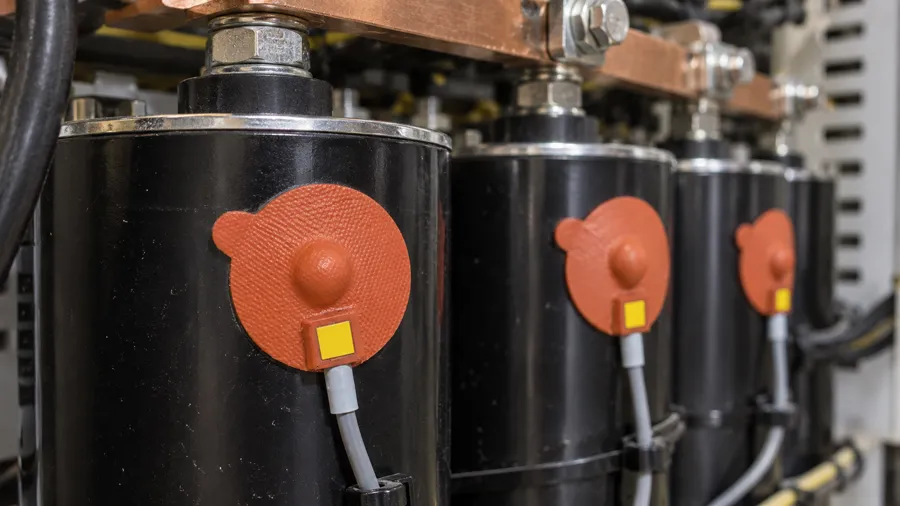
A Thermalpas space-type sensor, built around a thermally conductive layer, was installed inside each freezer, with a compressor temperature sensor on the outside. The system kept a real-time temperature log, alerted the pharmacy team by LINE or SMS on any drift, and captured every excursion automatically as an electronic record.
The outcome
A typical medical center monitors 20 freezers. At one client site, three night-time compressor anomalies were detected in the first year, each an early-stage failure caught before the vaccines themselves saw a temperature excursion. The site estimates the spoilage exposure across those three events at more than $1.5 million.
Have a similar asset at your plant?
Tell us which asset worries you most (busbars, motors, panels, chillers), and we'll show you what an OctosX deployment there would look like.