Thermalpas field deployment (Taiwan) · Heavy Industry
Chemical plant stack: an 8°C drift led to a hairline weld crack
Thermal and leak monitoring along a 200–400°C exhaust stack.
- 8Sensors deployed
- $50KWeld repair cost
- $2M+Plant-estimated fine exposure

The problem
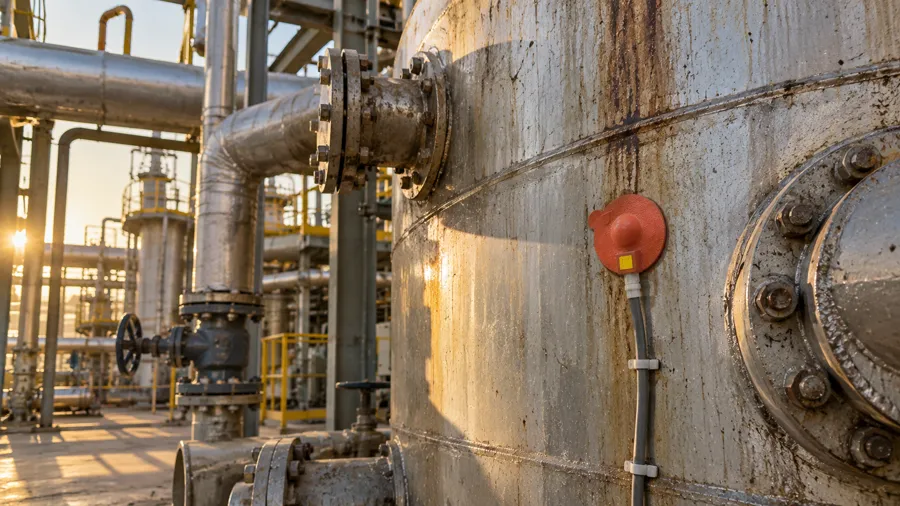
A chemical plant's high-temperature exhaust stack runs at 200–400°C around the clock, carrying combustion gases up a tall steel chimney. Every weld and every plate slowly thins from the inside — and when a weld cracks, the gas leaking from it is hot, toxic, and a regulatory violation. You can't safely inspect a hot stack from a ladder, and 24/7 manual patrol is not feasible.
What was installed
Eight Thermalpas G2-series sensors (rated to 250°C) were attached along the stack at known intervals. Trend analysis learned each segment's normal temperature profile over a week, then flagged any segment drifting more than 15% off baseline — usually a sign the metal is thinning or a small crack is forming.
The outcome
At one chemical plant, the system picked up an 8°C rise on stack segment #3 over 72 hours — still within operating range, but trending the wrong way. Inspection during the next planned outage found a hairline weld crack. The $50,000 weld repair was set against a gas leak and an EPA fine the plant conservatively estimated at $2M+.
Have a similar asset at your plant?
Tell us which asset worries you most (busbars, motors, panels, chillers), and we'll show you what an OctosX deployment there would look like.