Power & Electrical Confidential

High-Voltage Busbar Continuous Thermal Sensing

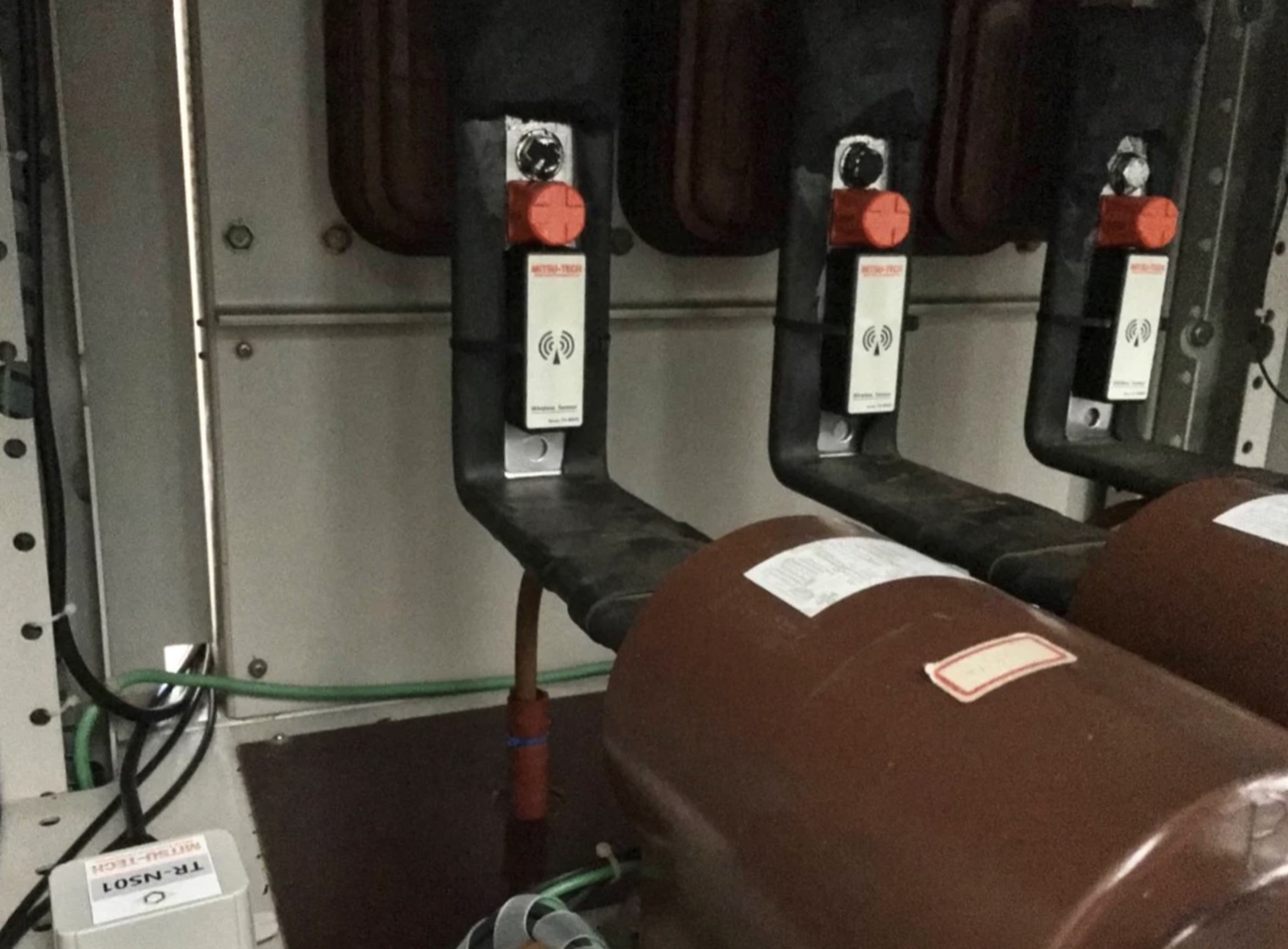
HV cabinets house three-phase busbars on porcelain insulators with finger-thick air gaps between phases.

High-Voltage Busbar Continuous Thermal Sensing — field installation photo
Confidential · Power & Electrical

01 The Problem

In a high-voltage cabinet, three-phase busbars route through the enclosure on porcelain insulators with finger-thick air gaps between them. The traditional way to check busbar temperatures was to shut the cabinet down, open the door, and point a thermal camera — and in a busy substation, the shutdown itself is a million-dollar problem.

The Risk

HV cabinets house three-phase busbars on porcelain insulators with finger-thick air gaps between phases.

Detection Gap

The traditional way to check temperatures is to shut the cabinet down and bring in a thermal-imaging crew — but in a busy substation, the shutdown itself is a million-dollar event.

02 The OctosX Solution

We attach self-powered Thermalpas modules to each busbar — they draw their operating energy from the magnetic field around the conductor, so no power wiring runs between phases. Each module reports to a gateway on the cabinet wall. OctosX's dashboard shows real-time three-phase balance — when one phase warms differently from the other two, the engineer knows immediately.

Sensor & Edge

Self-powered Thermalpas modules attach to each busbar, drawing their operating energy from the magnetic field around the conductor — no inter-phase cabling required.

Cloud Logic & Alerting

Each module reports to a gateway on the cabinet wall. OctosX shows real-time three-phase balance.

03 The Outcome

A mid-sized industrial substation instrumented 30 sensors for about $600K. Before, they ran four annual shutdown inspections, each costing about $1.2 million in lost production. With OctosX, inspections are scheduled only when the data warrants them. The system paid for itself inside Year 1.

Field Detection

A mid-sized industrial substation deployed 30 sensors for about $600K. They previously ran four shutdown inspections per year, each costing about $1.2M in lost production.

Quantified Impact

With OctosX, inspections are scheduled only when the data warrants. Payback inside Year 1.

Key Numbers

30Sensors deployed
$1.2MAvoided per shutdown
Year 1Payback achieved

See it in your plant

Could this case be your plant?

Tell us about your facility — busbars, motors, panels, coal blowers, chillers, whatever your highest-risk thermal interface is — and we'll show you what an OctosX deployment would look like.