Thermalpas field deployment (Taiwan) · Power & Electrical
Shopping mall substation: judging busbar joints by temperature rise
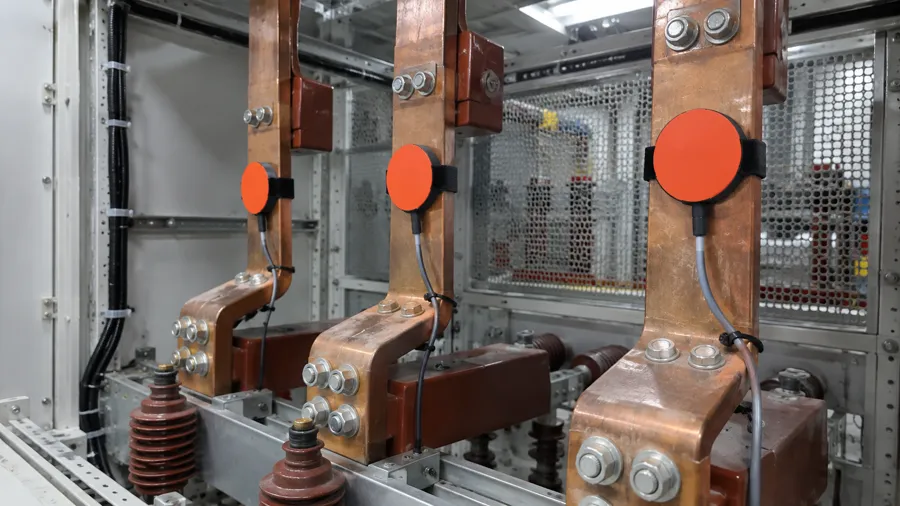
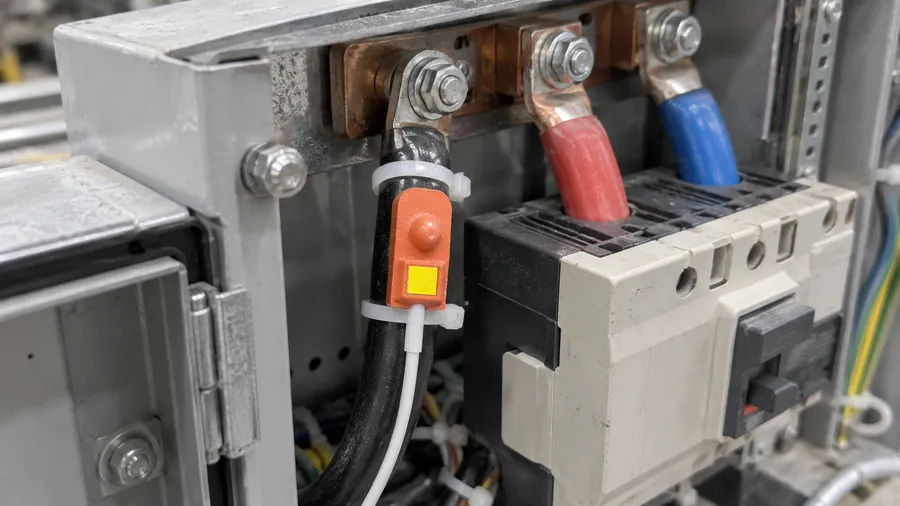
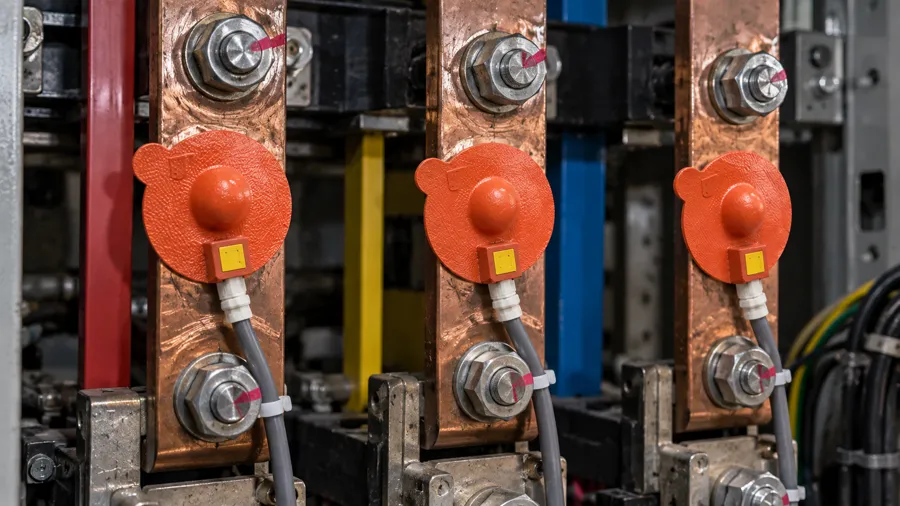
Thermalpas sensors on the busbar joints of a large retail mall's substation, assessed by temperature rise above ambient rather than by raw reading.
- 70°CExample rise at full load (90°C reading − 20°C ambient)
- 50°CExample K-value limit for temperature rise

The problem
The substation busbars of a large shopping mall in New Taipei needed safety temperature monitoring. Taiwan has frequent earthquakes, and after long-term vibration the busbar connection points can develop poor contact. Contact resistance rises, the joint heats locally, and that is a fire risk. Running at or near rated load can also push busbar and joint temperatures abnormally high. Watching the temperature inside the switchgear was not enough: the key busbar nodes, including the raised joint sections, needed real-time readings so that local hot spots would show up.
What was installed
Thermalpas surface sensors were bonded to the busbar runs at the joints, with a local digital display mounted nearby. The assessment uses conductor temperature at full (100%) load and converts it to a temperature rise: for example, a 90°C reading minus a 20°C ambient gives a 70°C rise. That rise is compared with the site's safety criterion, the K-value (for example K = 50°C). A rise above K is flagged as an abnormally high temperature with a potential fire risk.
The outcome
The temperature-rise results are read together with the site's existing power-analysis system to work out why a joint is running hot: uneven load distribution, joint deterioration, poor contact or inadequate cooling. From there the team plans the corrective work, such as rebalancing load, re-making joints or improving heat dissipation, to bring busbar temperatures down.
Have a similar asset at your plant?
Tell us which asset worries you most (busbars, motors, panels, chillers), and we'll show you what an OctosX deployment there would look like.