Thermalpas field deployment (Taiwan), customer's own account · Power & Electrical
Petrochemical group UPS rooms: surface sensors as one layer of a five-layer protection design
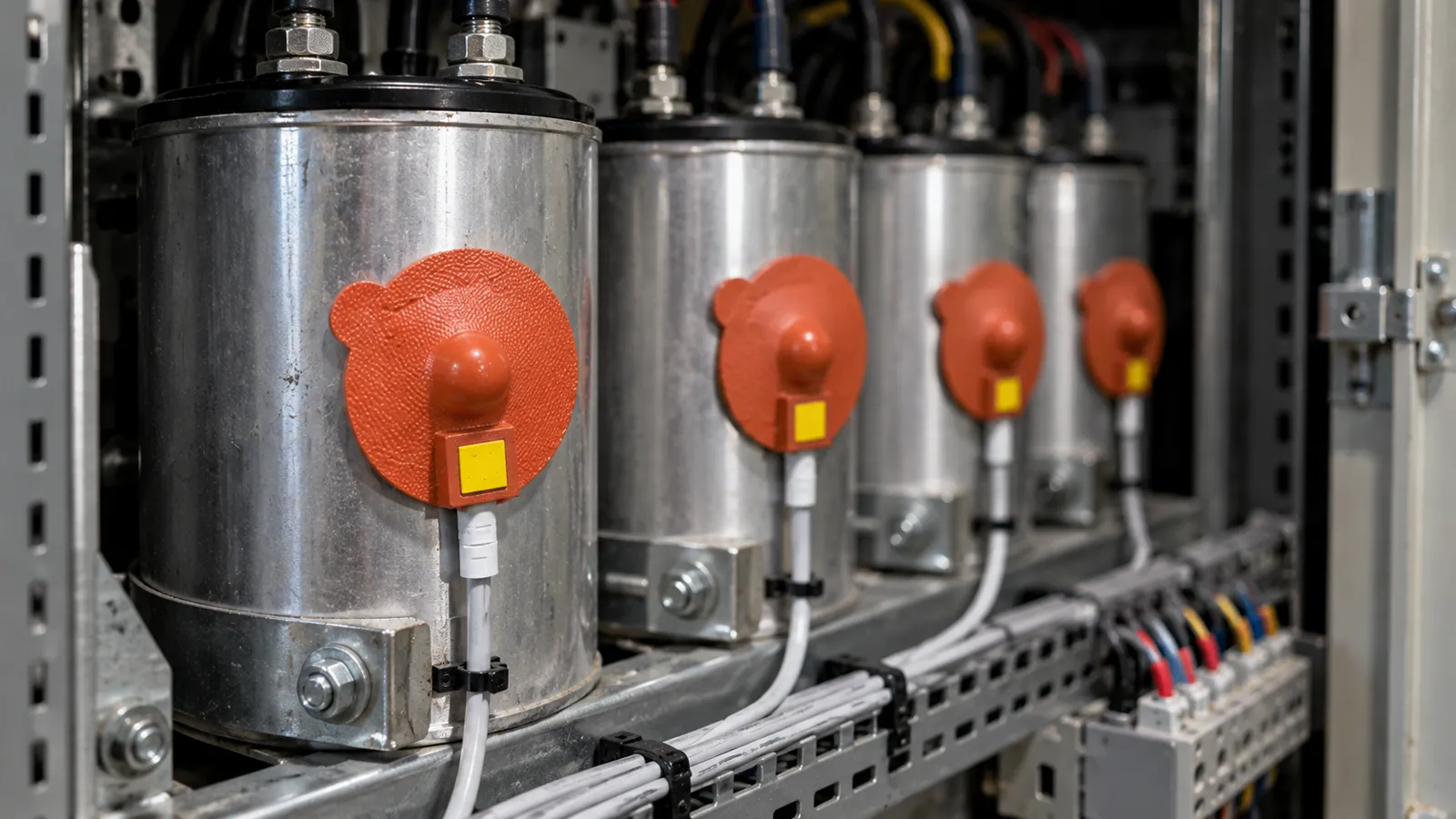
In the customer's own write-up, surface-mounted PT100 sensors on UPS panels and AC capacitors are the on-line monitoring layer of a five-layer protection framework.
- 5Protection layers in the customer's UPS design framework
- 2Surface-sensor locations: panel body and AC capacitor shells
The problem
UPS main panels carry banks of AC and DC capacitors. Writing up their own UPS improvement work, the customer's engineers proposed a layered protection framework for UPS main panels: independent capacitor compartments, capacitor self-protection devices (internal fuses, auto-disconnecting bases and pressure-relief space), surface-mounted temperature sensors on the capacitors, temperature monitoring inside the main panel, and a very-early smoke-detection system. They also recommended against installing several UPS units in the same room.
What was installed
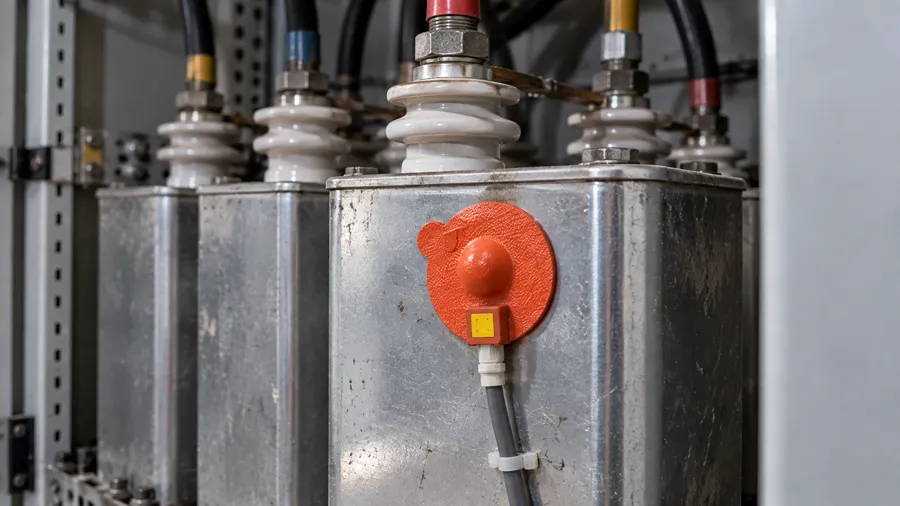
Surface-mounted PT100 temperature sensors were added to the UPS panel body and the outer shells of the AC capacitors. They show the temperature of the panel and of individual capacitors in real time, and are wired to a paperless recorder for trend management and alarms. Alongside the sensors, the team added capacitor inspection windows for routine visual and infrared checks, measured individual capacitors with an LCR meter (capacitance, ESR and dissipation factor), and installed a separate very-early smoke-detection system with seven sampling points.
The outcome
This is the customer's own account, not an OctosX measurement, and it reports no incident figures. Its value is the design: surface temperature sensing is one layer among several, sitting between passive measures in the panel and smoke detection, and it is the layer that gives a continuous temperature trend for each capacitor.
Have a similar asset at your plant?
Tell us which asset worries you most (busbars, motors, panels, chillers), and we'll show you what an OctosX deployment there would look like.